Electronic lost property is an unavoidable reality for transport operators. Phones, tablets, laptops and accessories are left behind every day across airports, rail networks, bus & coach services and ports. What is often overlooked is that these devices and accessories continue to carry data protection risk long after they are placed into lost property storage.
Under UK GDPR and the Data Protection Act, organisations have a responsibility to protect personal data and personally identifiable information (PII) wherever it exists. This obligation applies regardless of whether a device is owned by the organisation or has been lost by a passenger.
Locked devices still carry responsibility
Most modern smartphones and tablets are protected by iCloud or Google account locks. While these security features prevent access by unauthorised users, they do not remove the organisation’s responsibility to manage the device lawfully once it becomes unclaimed.
In practice, locked devices often remain in storage for extended periods, creating uncertainty around ownership, status and disposal. Without a structured process, organisations can struggle to demonstrate what happened to those devices, when decisions were made, and how risk was managed.
Where risk commonly arises
Across the transport sector, GDPR risk typically arises from:
- Devices held beyond the statutory retention period
- Inconsistent handling across locations or teams
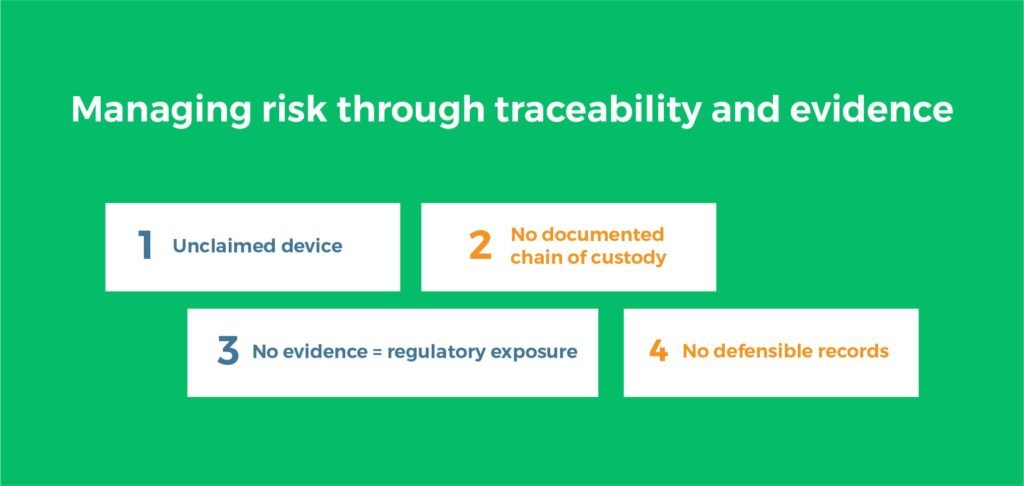
- Lack of documented chain of custody
- No clear evidence of how data risk was mitigated
- Limited reporting on final processing outcomes
In the event of a complaint or investigation, the absence of an evidential audit trail can be as problematic as an actual data breach.
Managing risk through traceability and evidence
The most effective way for transport operators to reduce GDPR exposure is to ensure that every unclaimed device follows a documented, auditable process from collection through to final outcome.
This includes:
- secure collection and handling
- lawful quarantine where required
- certifiable data erasure where technically possible
- WEEE Directive compliant destruction where erasure is not possible
- a complete audit trail for every item
Compliance is not just about outcomes. It is about evidence. Transport operators that can demonstrate due diligence through clear records, certificates and reporting are far better protected.